
How it works
From the first pin to a claimed map.
GeologyGo is played outside. You sign in with a Geology365 account, open the map, and walk. Everything below happens from that walk.
Collecting
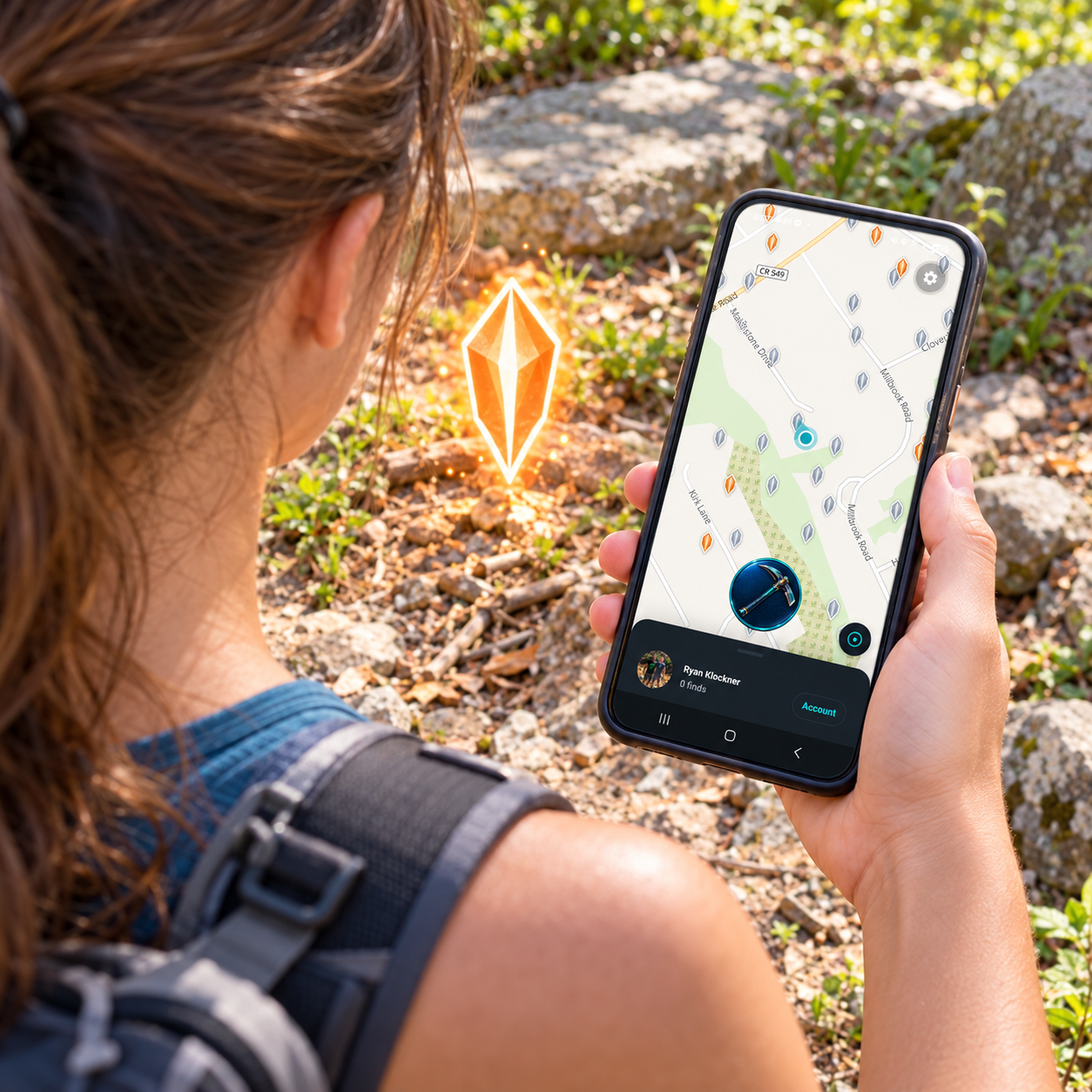
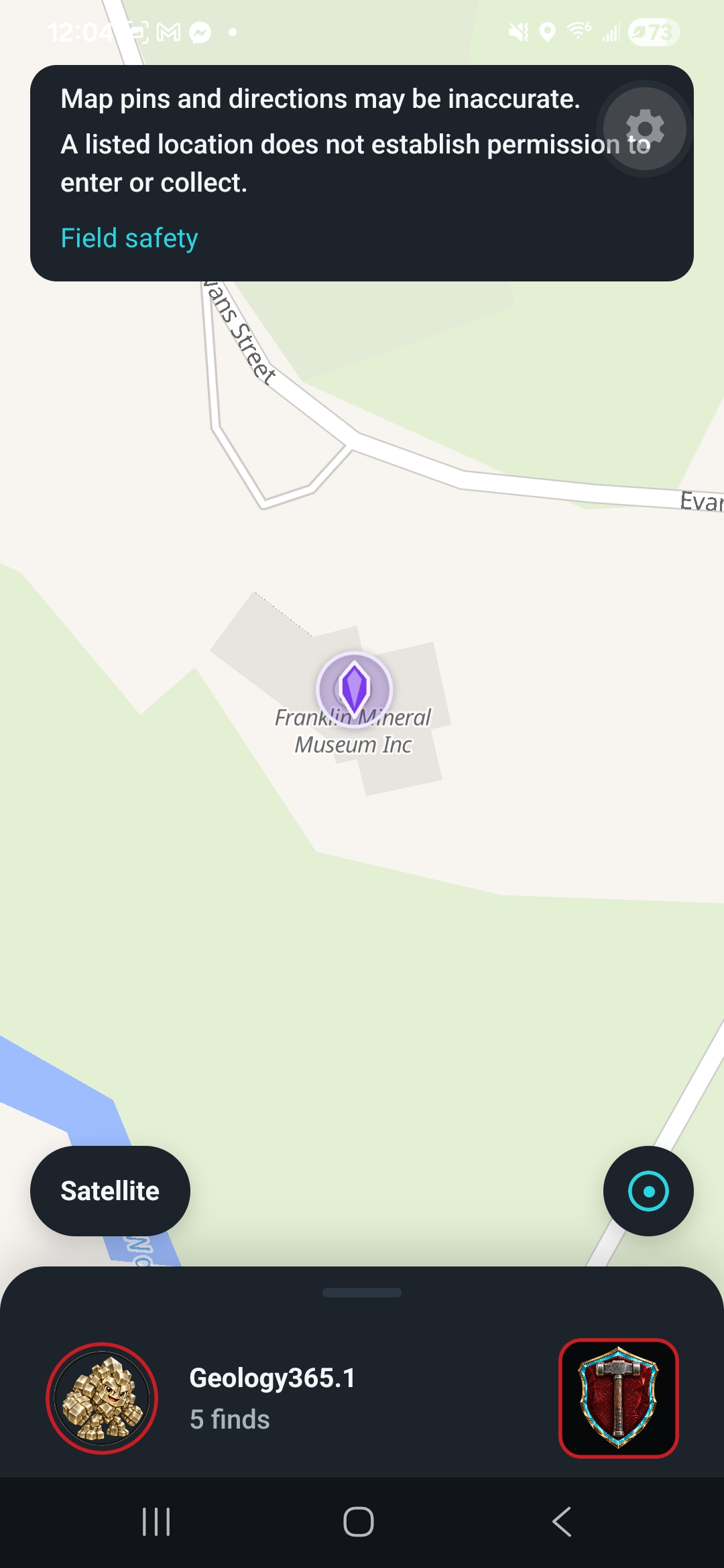
The map shows mineral specimens near you. Walk until you are close enough, then collect. Each specimen can be collected once by you. If you wait too long, it leaves the map.
A find records the mineral, a level, a quality from Poor to Museum, and a rarity from Common to Legendary. Crystal artwork varies, so two pieces of the same mineral do not have to look alike.
Pins are placed at random. A pin is a place in the game. It does not give you permission to enter private property, and it does not replace local collecting rules, permits, or your own judgment about the ground. Collect only where you already have legal access.
High grading
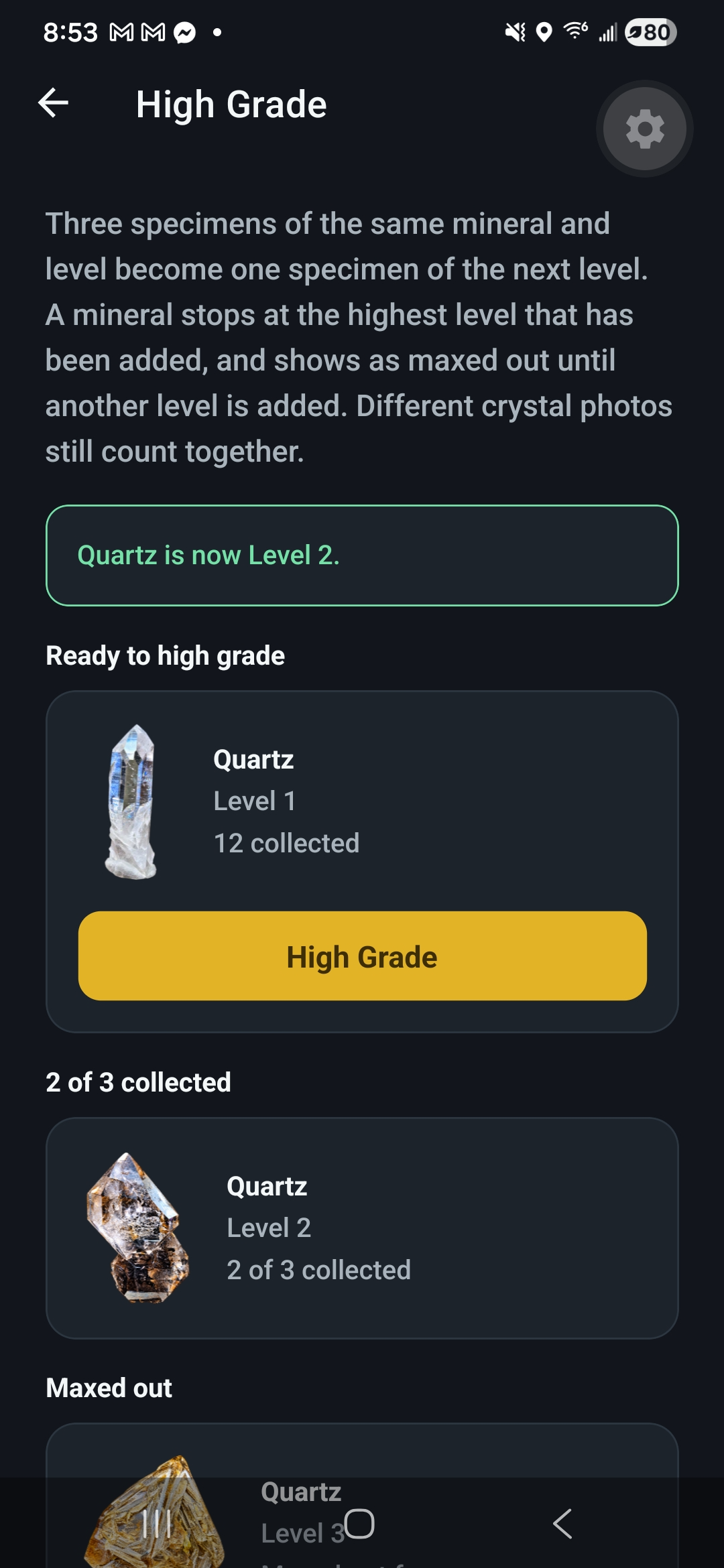
Three specimens of the same mineral at the same level can be high graded. Those three leave your collection and become one specimen of the next level. The new piece keeps the best quality and the best rarity of the three.
You can keep climbing for as long as that mineral has a higher level. Finds from a special place stay as they are and do not join a high-grade set.
Teams
Every collector joins one of four teams: Hammer, Pickaxe, Chisel, or Shovel. Your team is the side you collect for. Claims, team standings, and the extra specimen from a friendly claim all follow that choice. You also pick an avatar: one of the mineral characters, or your Geology365 photo.
-
 Hammer
-
 Pickaxe
-
 Chisel
-
 Shovel
Pick your Avatar
Choose one of these minerals, or use your Geology365 photo. Your avatar shows on the leaderboard.
-
 Azurite Malachite
-
 Benitoite
-
 Calcite
-
 Diamond
-
 Fluorite
-
 Franklin
-
 Prehnite
-
 Pyrite
-
 Pyromorphite
-
 Quartz
-
 Rhodochrosite
-
 Stibnite
-
 Watermelon Tourmaline
-
 Wulfenite
Stake Your Claim
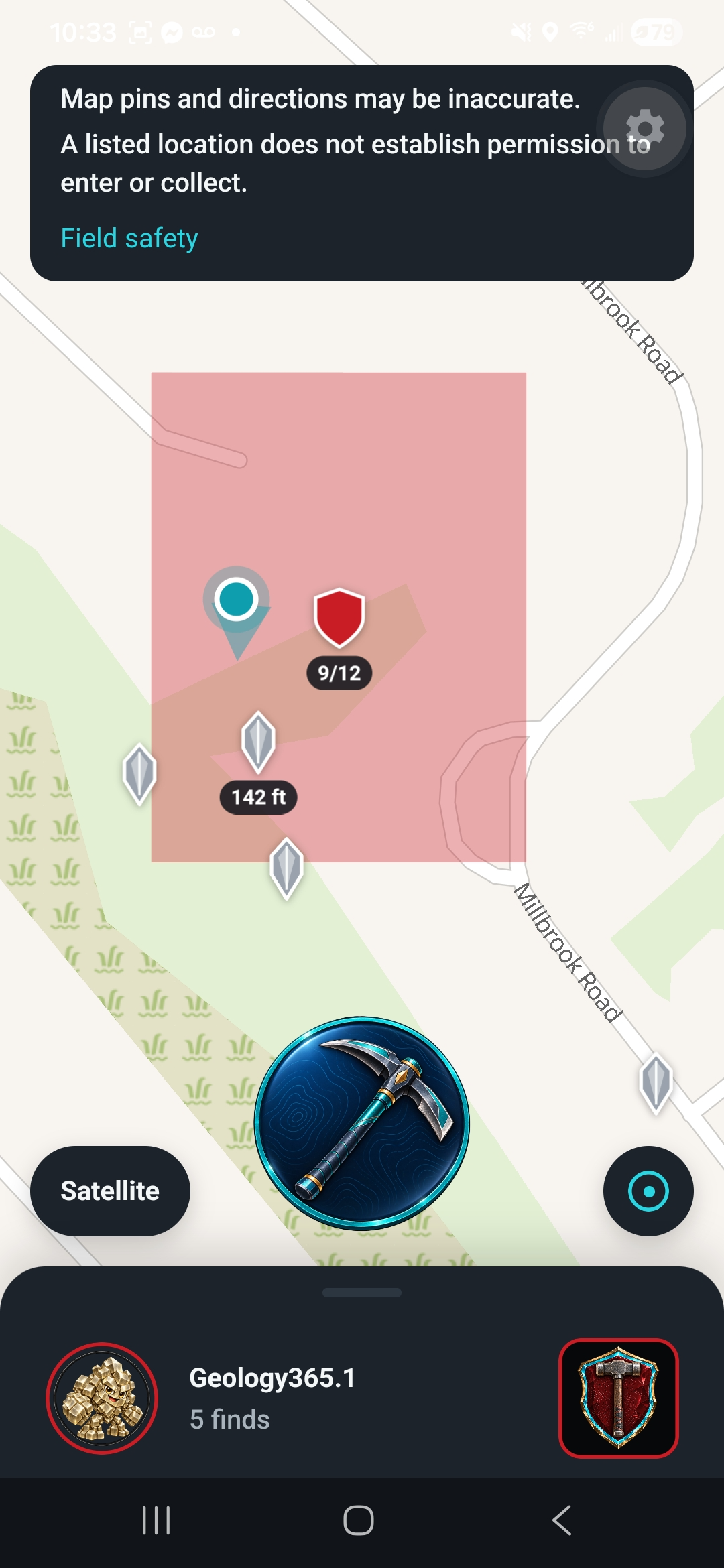
The map is split into quadrants. Collect in an open quadrant and your team stakes it. Collect again in a quadrant your team already holds and the claim gets stronger. Collect in another team’s quadrant and you chip away at it. Bring it down and your team takes the claim.
A claim shows how well it is held: a sign, then a fence, then a guard. Teammates collecting inside a claim have a chance to find an extra specimen, and a stronger claim makes that chance better. If the owning team stops collecting there, the claim fades.
Leaderboards
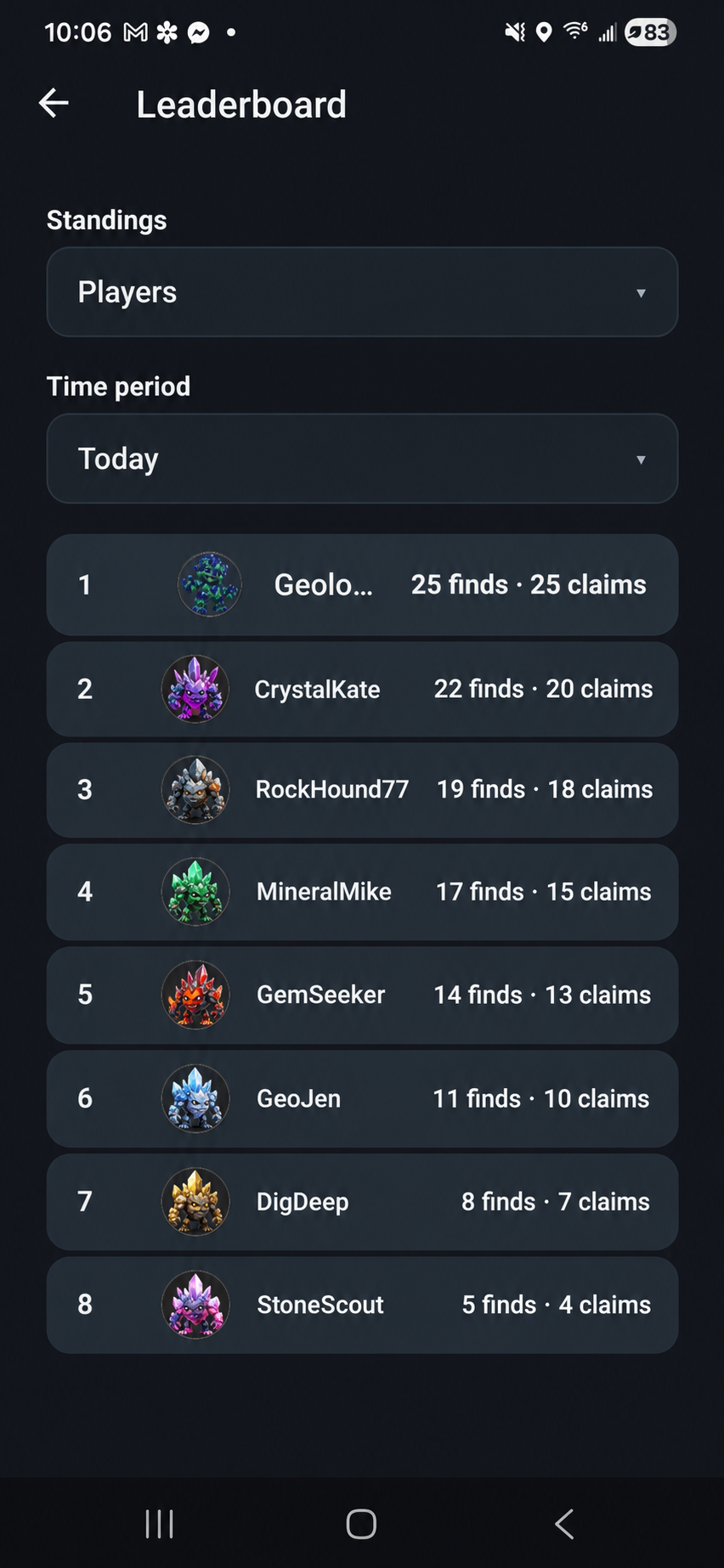
Players are ranked by what they collect: today, this week, this month, this year, and all time. Teams are ranked by how many quadrants they hold. Your row stays visible so you can see where you stand even when you are off the top of the list.
Special places
Some locations are tied to a real specimen. While that place is open, you can collect one new specimen a day, in order, until you have the set. Those finds stay in your collection. They are not stacked into a high-grade set with the crystals you find on the regular map.
Want to collect before the rest of the public does?
We are looking for beta testers. iOS and Android downloads will land here when the public release is ready.
Beta testing